


A company needs someone who can walk in and start delivering results in week two, not month six. That single requirement is why lateral hiring exists, and why more companies are leaning on it than they used to.
Lateral hiring isn’t a new idea, but it’s become a much bigger part of how companies build teams, especially as skill gaps in specialized areas like AI, cybersecurity, and compliance widen faster than internal training programs can close them. Here’s what lateral hiring actually means, when it genuinely helps, and where it tends to go wrong.
What Is Lateral Hiring?
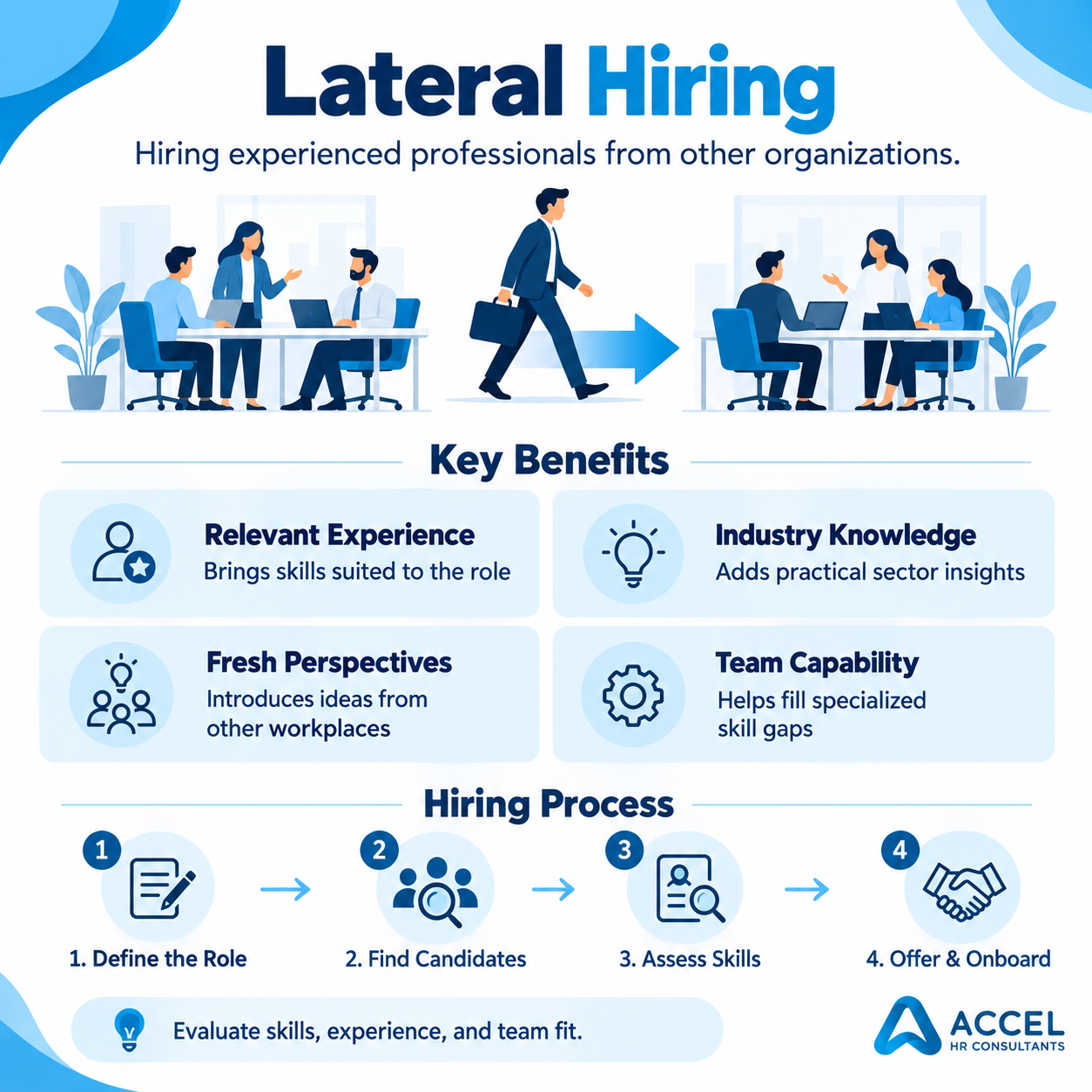
Lateral hiring means recruiting an experienced professional from outside your company for a role at roughly the same seniority level they already hold elsewhere. It’s not a promotion, and it’s not an entry-level hire, it’s bringing in someone who’s already doing similar work somewhere else and can step into a comparable role with minimal ramp-up time.
Think of it like signing an established player from another team rather than developing one from the youth academy. You’re not paying for potential, you’re paying for a track record that already exists and can be verified.
Lateral Hiring vs. Fresher Hiring
The clearest way to understand lateral hiring is to compare it against its opposite: hiring fresh graduates or entry-level candidates with little to no prior experience.
| Lateral Hiring | Fresher Hiring | |
|---|---|---|
| Time to productivity | Fast, often weeks | Slow, often months |
| Cost | Higher salary, signing incentives | Lower starting salary |
| Training investment | Minimal | Significant |
| Cultural fit risk | Higher | Lower |
| Long-term loyalty potential | Variable | Often stronger, if retained well |
Fresher hiring is a long-term investment, you’re trading a slower ramp-up for someone who’s shaped entirely by your company’s processes and culture from day one. Lateral hiring trades that blank slate for speed, you get someone productive almost immediately, but they arrive with habits, expectations, and sometimes baggage from wherever they came from. Most growing companies end up needing both, freshers to build a pipeline for the future, lateral hires to solve problems that can’t wait that long.
Lateral Hiring vs. Leadership Hiring
These two terms get confused often, but they’re not interchangeable. Lateral hiring simply means recruiting someone at a similar level from outside the company, it can apply to a mid-level specialist just as easily as a senior manager. Leadership hiring (or executive search) specifically targets senior leadership and C-suite roles, and it comes with a different process entirely, typically involving retained search firms, longer timelines, and far more emphasis on strategic alignment and organizational fit rather than pure technical capability.
In practice, leadership hiring is almost always a form of lateral hiring, since you’re rarely promoting someone internally straight into a C-suite role, but not all lateral hiring is leadership hiring. A mid-level software engineer hired from a competitor is a lateral hire. A new CFO brought in from another company is both a lateral hire and a leadership hire, and the recruitment approach for each looks noticeably different.
Why Companies Are Leaning on Lateral Hiring More
A few forces are pushing lateral hiring further up the priority list for most companies right now. Specialized skill shortages, particularly in AI, cybersecurity, and cloud infrastructure, mean the talent simply doesn’t exist in large enough numbers to train internally fast enough. Companies entering new markets or launching new business lines often don’t have the luxury of a multi-year ramp-up either, they need someone who already understands the space.
There’s also a simple reality about who’s actually available. The most experienced professionals worth hiring are rarely sitting on job boards actively applying, they’re usually employed, performing well, and need to be approached directly rather than found through a standard posting. This is exactly the kind of search that benefits from dedicated headhunting rather than a passive recruitment process, since reaching someone who isn’t looking requires a different approach entirely from screening inbound applications.
The Real Benefits of Lateral Hiring
The upside is fairly straightforward once you’ve felt the pain of a slow, expensive training cycle. Lateral hires typically reach full productivity in weeks rather than months, since they’re not learning the fundamentals of the role, just your company’s specific way of doing things. They bring proven expertise you can verify through references and past work, rather than potential you’re betting on. They also tend to bring an outside perspective, having seen how other companies solve similar problems, which can surface blind spots your existing team has stopped noticing.
For senior and niche roles specifically, lateral hires often come with an established professional network, useful for partnerships, client relationships, and even future hiring, since strong people tend to know other strong people.
The Real Risks Worth Planning For
Lateral hiring isn’t free of downside, and pretending otherwise leads to bad outcomes. Cultural incompatibility is the most common failure point, someone who thrived under one company’s management style or pace doesn’t automatically thrive under a different one, and this mismatch often only becomes obvious a few months in. Retention is a genuine concern too, professionals who are used to moving for the right opportunity tend to keep moving if the new role doesn’t meet expectations, and industry research in the legal sector has found that a significant share of lateral hires leave within their first few years, a pattern that shows up across other high-lateral-hiring industries like finance as well.
Cost is the other obvious trade-off. Experienced hires know their market value, and with salary benchmarking tools now widely accessible, they usually know it precisely, which means lateral hires typically command premium compensation, signing incentives, and stronger negotiating positions than a fresher would. For genuinely niche roles, the available talent pool can also be small enough that the search itself takes longer than expected, even though the eventual hire ramps up faster once they’re in.
Getting Lateral Hiring Right: What Actually Matters
Success with lateral hiring tends to come down to a few consistent factors rather than luck. Clearly defining the specific competencies the role actually needs, before starting the search, prevents companies from chasing an impressive resume that doesn’t actually match the gap they’re trying to fill. Working with recruiters who understand the specific domain matters more here than in general hiring, since evaluating a senior specialist’s actual expertise requires someone who can tell the difference between genuine depth and a well-polished interview performance.
Onboarding deserves more attention than it usually gets too. A highly skilled lateral hire who isn’t properly integrated into how the company actually operates day to day can fail to deliver on the exact promise that justified their higher cost in the first place. Clear communication about culture and expectations early on, rather than assuming an experienced hire will simply figure it out, meaningfully reduces the early attrition risk that makes lateral hiring expensive when it goes wrong.
FAQs
Q1: What does lateral hiring mean in simple terms? It means hiring someone from outside your company who already works at a similar level doing similar work, rather than promoting internally or hiring an entry-level candidate. They bring proven experience and can typically contribute much faster than someone starting from scratch.
Q2: Is lateral hiring the same as leadership hiring? Not exactly. Leadership hiring specifically targets senior and executive roles and usually involves a more strategic, retained search process. Lateral hiring is the broader category, it can apply to a mid-level specialist just as easily as a senior executive.
Q3: What’s the biggest risk with lateral hiring? Cultural fit and retention. Someone who performed well under a different company’s management style, pace, and expectations doesn’t always adapt smoothly to a new one, and this mismatch is the most common reason lateral hires leave earlier than expected.
Q4: Is lateral hiring more expensive than hiring freshers? Generally, yes. Lateral hires bring proven experience and usually negotiate from a position of strength, since they typically have current market salary data and aren’t desperate for their first role. The trade-off is faster time to productivity, which can offset the higher upfront cost depending on how urgently the role needs to be filled.
A Final Thought
Lateral hiring works best as a deliberate choice for roles where speed and proven expertise genuinely matter, not as a default approach applied to every open position. Used well, it fills urgent gaps with people who can hit the ground running. Used carelessly, it becomes an expensive way to find out that experience alone doesn’t guarantee a good fit.
If you’re trying to fill a role that needs someone who can deliver from day one, Accel HR’s recruitment team can help you find candidates who genuinely match what the role requires, not just an impressive title on a resume.